




The Science, the Excitement, and What You Should Know
Have you noticed how often people are talking about peptides lately?
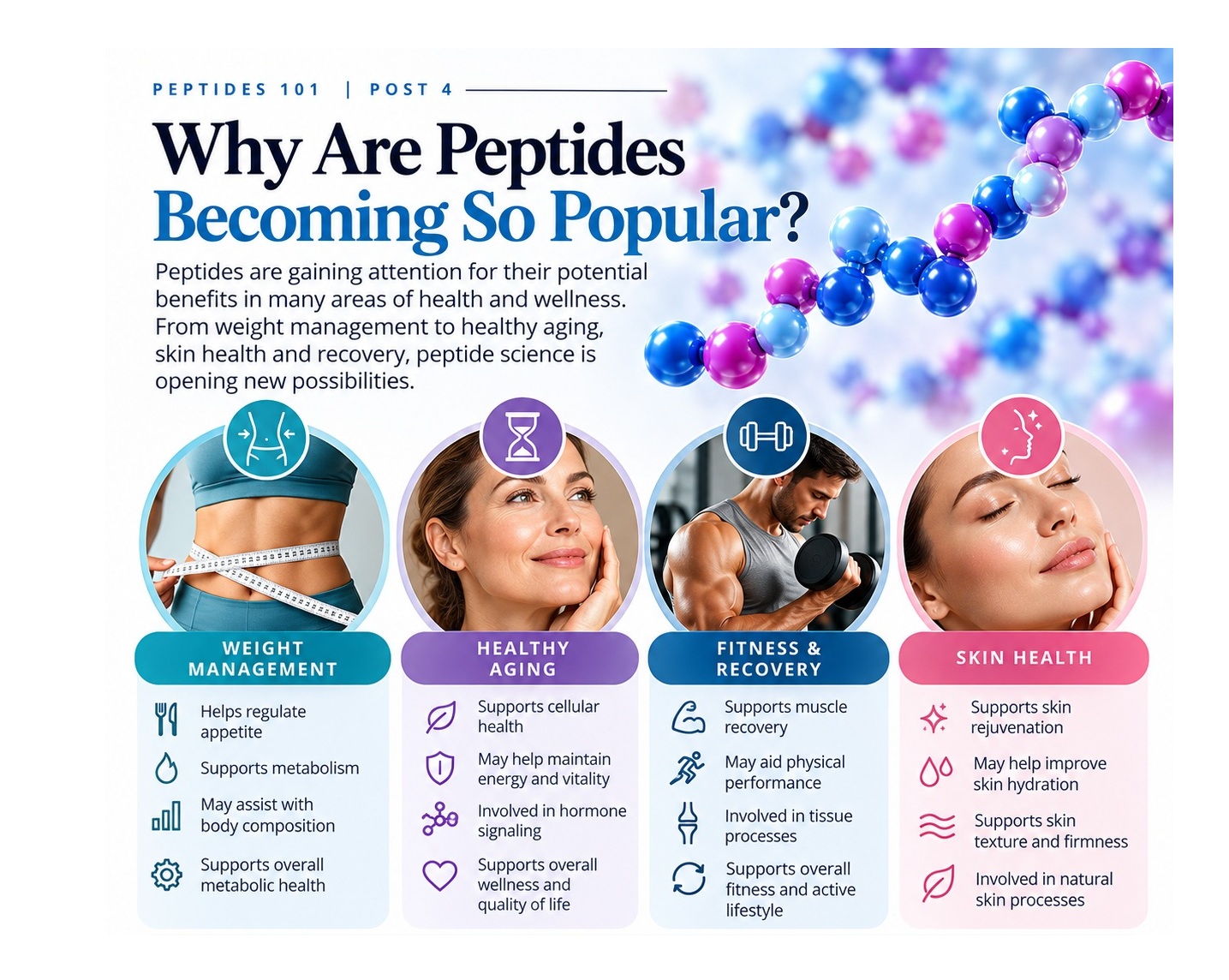
From weight loss and healthy aging to skin rejuvenation, muscle recovery, and overall wellness, peptides seem to be everywhere. Social media influencers are discussing them. Wellness clinics are introducing peptide-related services. Researchers are studying new applications, and patients are becoming increasingly curious about their potential benefits.
But why are peptides suddenly getting so much attention? Are they truly changing modern medicine, or is some of the excitement driven by marketing?
The answer is a little of both.
Let's explore why peptides are becoming so popular, what science actually tells us, and what everyone should understand before considering peptide-based treatments.
1. Peptides Are Not New—But Public Awareness Is
Although peptides may sound like a new medical discovery, they have been studied and used in medicine for decades. Peptides are short chains of amino acids. Many naturally occurring peptides function as biological messengers, helping cells communicate and regulate important processes throughout the body. Some peptide-based medications are already well established in modern medicine.
For example:
- Insulin: A peptide hormone used to manage diabetes.
- Semaglutide: A GLP-1 receptor agonist used in certain FDA-approved medications for diabetes and weight management, among other approved indications.
- Teriparatide: A peptide-based medication used for certain patients with osteoporosis.
- Glucagon: A peptide hormone used in medications that treat severe low blood sugar.
These examples demonstrate that peptide-based medicines are not simply a wellness trend. They are already an important part of healthcare.
2. Weight Management Has Brought Peptides Into the Spotlight
One of the biggest reasons for the growing popularity of peptides is the success of GLP-1–based medications. Medications such as semaglutide and liraglutide have received significant attention for their roles in managing type 2 diabetes and chronic weight management. These medications act on biological pathways involved in appetite, glucose regulation, and metabolism.
For many people, this has introduced an entirely new way of thinking about weight management. Instead of focusing exclusively on calories, exercise, and willpower, medical research has helped explain how hormones and biological signaling influence hunger, fullness, and metabolic regulation.
This has created enormous interest in peptide-based medicine.
3. Interest in Healthy Aging and Longevity
Another major reason peptides are attracting attention is the growing interest in healthy aging. People are increasingly interested in maintaining energy, physical function, metabolic health, and quality of life as they get older. Some peptides are being researched for their roles in biological pathways associated with:
- Hormone signaling
- Metabolism
- Cellular communication
- Skin biology
- Growth and development
- Age-related physiological changes
Many anti-aging and longevity claims circulating online go well beyond the available human clinical evidence. Healthy aging remains a complex process influenced by genetics, nutrition, physical activity, sleep, medical conditions, and numerous biological pathways.
4. Fitness, Muscle Recovery, and Physical Performance
Peptides have also gained attention in fitness and athletic communities. Online discussions frequently mention peptides in connection with muscle growth, workout recovery, body composition, injury rehabilitation, and physical performance. Some investigational peptides are being studied for effects on growth-hormone pathways or tissue-related biological processes. For example, substances such as BPC-157 and TB-500 are frequently discussed in online recovery communities. However, these products are not FDA-approved for treating injuries or improving athletic recovery, and adequate human safety and effectiveness evidence is lacking.
5. Skin Health and Aesthetic Medicine
Peptides have also become increasingly popular in the beauty and skin-care industry. Many skin-care products contain peptides marketed for concerns such as:
- Fine lines and wrinkles
- Skin texture
- Skin hydration
- Appearance of firmness
- Signs of skin aging
Certain peptides are being studied for their interactions with pathways involved in skin biology.
For example, copper-containing peptides such as GHK-Cu have attracted research interest in dermatology and tissue-related processes.
6. Advances in Medical Research
One reason peptide science continues to attract researchers is that some peptides can interact with highly specific biological receptors. Think back to our previous post, where we discussed the lock-and-key concept. A peptide can act like a biological message, interacting with a receptor and influencing a particular pathway. Scientists can study these interactions to develop medications designed for specific medical conditions.
Research into peptide-based therapeutics continues across fields including:
- Diabetes and metabolic disorders
- Obesity
- Endocrine diseases
- Osteoporosis
- Reproductive medicine
- Gastrointestinal conditions
- Cancer research
- Neurological disorders
These developments help explain why peptide-based medicine is an active and exciting area of pharmaceutical research.
7. Social Media Has Accelerated the Conversation
Social media has played a major role in bringing peptides into everyday conversations. Short videos, podcasts, celebrity discussions, and wellness influencers frequently describe peptides as exciting new tools for improving health.
You may encounter claims suggesting that certain peptides can:
- Reverse aging
- Rapidly build muscle
- Heal injuries
- Dramatically increase energy
- Improve nearly every aspect of wellness
8. What Should You Know Before Considering Peptide Therapy?
Before considering any peptide-based treatment, it is important to ask a few questions.
- What is the exact name of the peptide?
- What medical condition is it intended to treat?
- What human clinical research supports its use?
- What are the possible side effects and risks?
- Are there safer or better-studied alternatives?
- Who will prescribe and monitor the treatment?
A qualified healthcare professional should be able to explain the potential benefits, limitations, and uncertainties of a specific treatment.
9. The Bottom Line: Exciting Science
Peptides are becoming popular for several reasons.The success of GLP-1 medications has increased public awareness. Advances in pharmaceutical research have created new possibilities. Interest in wellness, healthy aging, skin care, and physical performance continues to grow. And social media has brought all these conversations together. There is genuine scientific potential in peptide-based medicine.
Not all peptides are the same.
As we continue our Peptides 101 series, we will explore individual peptides, how they work, what the research shows, potential benefits, and possible risks. My goal is to make complicated medical information easier to understand so you can ask better questions and make informed healthcare decisions.
Education Before Treatment.
Coming Next in Peptides 101: GLP-1, GIP & Triple-Action Peptides: The Science Behind Modern Weight Management