





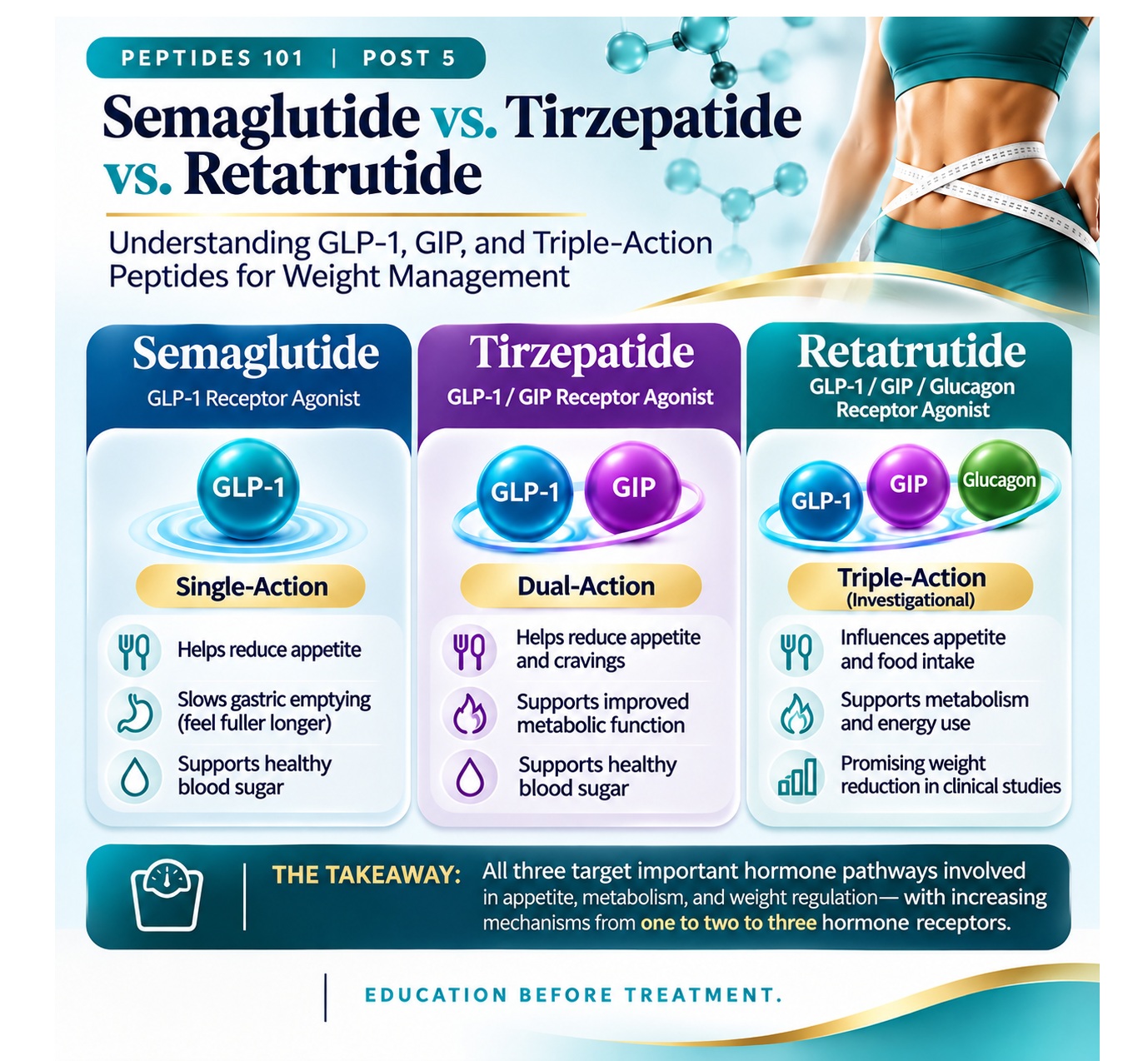
Semaglutide vs. Tirzepatide vs. Retatrutide
Understanding GLP-1, GIP, and Triple-Action Peptides for Weight Management
Have you ever wondered why some medications can help people feel less hungry, stay full longer, and lose significant amounts of weight?
The answer involves more than simply eating less. Our bodies have a complex communication system involving hormones that regulate hunger, digestion, blood sugar, and metabolism. Three medications have attracted considerable attention in this field: semaglutide, tirzepatide, and retatrutide.
Let's explore how they work, what makes them different, and what the research actually tells us.
Understanding the Hormones Behind Weight Management
Before comparing these medications, it's helpful to understand three important hormones.
GLP-1 (Glucagon-Like Peptide-1)
GLP-1 is a hormone naturally released by the intestines after eating. It helps regulate blood sugar by stimulating glucose-dependent insulin secretion, slowing gastric emptying, and influencing appetite and feelings of fullness.
GIP (Glucose-Dependent Insulinotropic Polypeptide)
GIP is another hormone released after eating. It helps regulate insulin secretion and participates in metabolic signaling. When activated together with GLP-1 receptors, it can contribute to improvements in blood sugar and body-weight regulation.
Glucagon
Glucagon is a hormone that helps maintain blood glucose, particularly when blood sugar is low. It also influences energy metabolism. Researchers are investigating whether carefully combining glucagon-receptor activation with GLP-1 and GIP signaling can produce additional metabolic benefits.
These three hormone pathways are central to understanding the medications discussed below.
1. Semaglutide: Targeting GLP-1
One medication. One primary hormone receptor pathway.
Semaglutide is a GLP-1 receptor agonist. This means it mimics certain actions of the body's naturally occurring GLP-1 hormone.
It works by:
- Influencing appetite-regulating pathways in the brain
- Increasing feelings of fullness
- Slowing gastric emptying
- Stimulating insulin release when blood glucose is elevated
- Reducing inappropriate glucagon secretion
Together, these effects can help reduce food intake and improve blood-sugar regulation.
2. Tirzepatide: Targeting GLP-1 and GIP
One medication. Two hormone receptor pathways.
Tirzepatide represents another approach to metabolic treatment.
Unlike semaglutide, which primarily targets GLP-1 receptors, tirzepatide activates both:
- GLP-1 receptors
- GIP receptors
These pathways work together to influence appetite, glucose regulation, and metabolic function.
Why is the dual mechanism important?
By targeting two hormone pathways, tirzepatide can produce substantial improvements in blood-sugar control and weight management. Clinical studies have shown significant weight reduction, and direct comparative research has demonstrated greater average weight loss with tirzepatide than with certain studied semaglutide regimens.
3. Retatrutide: The Investigational Triple-Action Medication
One medication. Three hormone receptor pathways.
Retatrutide is an investigational medication designed to activate:
- GLP-1 receptors
- GIP receptors
- Glucagon receptors
This combination is why retatrutide is described as a triple-receptor agonist. Researchers are studying whether activating all three pathways can produce additional effects on appetite, glucose regulation, and energy metabolism.
What Are the Possible Side Effects?
Common side effects of approved GLP-1–based medications may include:
- Nausea
- Vomiting
- Diarrhea
- Constipation
- Abdominal discomfort
- Reduced appetite
More serious risks associated with semaglutide and tirzepatide include pancreatitis, gallbladder problems, dehydration-related kidney injury, severe gastrointestinal reactions, and allergic reactions. These medications also carry boxed warnings concerning thyroid C-cell tumors observed in rodents and are contraindicated in patients with a personal or family history of medullary thyroid carcinoma or multiple endocrine neoplasia syndrome type 2. Retatrutide has also produced gastrointestinal adverse events in clinical trials, but its complete long-term safety profile is still being established.
Patients should discuss medication-specific risks, contraindications, and monitoring with a qualified healthcare professional.
Who May Benefit From Medical Weight Management?
Prescription weight-management medications may be considered for certain adults with obesity or overweight and qualifying weight-related medical conditions.
A healthcare professional should evaluate:
- Weight and metabolic health
- Medical history
- Current medications
- Previous weight-management efforts
- Potential contraindications
- Treatment goals
- Appropriate follow-up and monitoring
Medication is only one part of a comprehensive weight-management approach. Nutrition, physical activity, resistance training, adequate protein intake, sleep, and long-term lifestyle changes remain important for maintaining health and preserving muscle during weight loss.
THE TAKEAWAY
Semaglutide targets one receptor pathway. Tirzepatide targets two. Retatrutide targets three.
Medical Disclaimer: This article is provided for educational purposes only and does not constitute medical advice. Medication benefits, risks, FDA approval status, and clinical appropriateness vary. Always consult a qualified healthcare professional before beginning, discontinuing, or changing treatment.
Education Before Treatment.
Coming Next in Peptides 101: Sermorelin — What Is It, and How Does It Influence Growth Hormone?