



In our last post, we talked about how peptides can act as "biological messengers", interacting with receptors and triggering specific signals in the body. But here’s a question I hear often: If peptides are made from amino acids, aren’t they basically proteins?
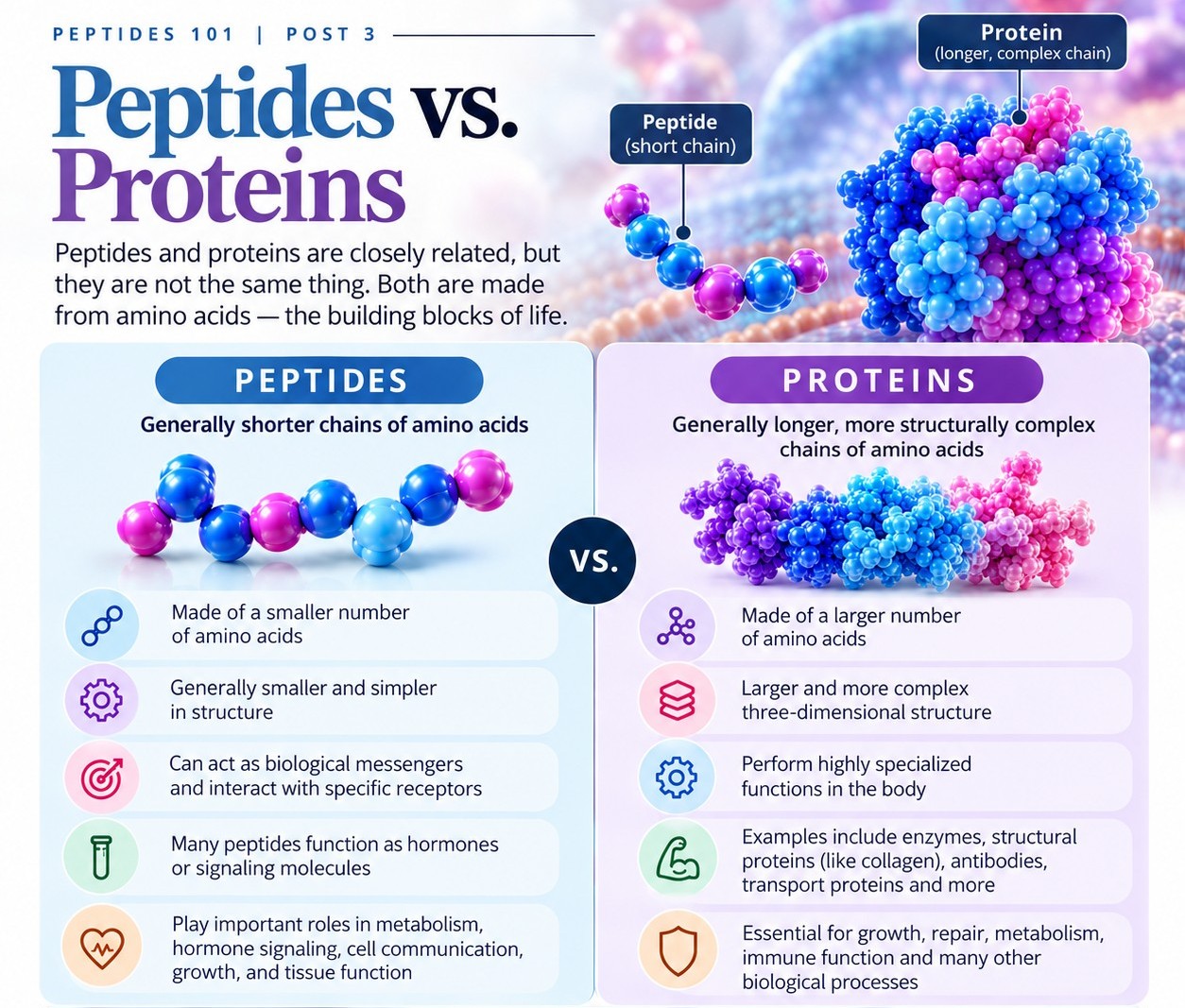
They’re closely related—but they’re not exactly the same. Think of amino acids as individual building blocks. When amino acids connect together, they form chains. Peptides are generally shorter chains of amino acids. Proteins are generally longer, more complex chains that fold into specific three-dimensional structures. That difference in size and structure helps determine what they can do in the body.
PEPTIDES
They may interact with specific receptors and influence biological processes involving:
• Hormone signaling
• Metabolism and appetite
• Blood-sugar regulation
• Digestion
• Growth and development
• Reproductive signaling
• Skin and tissue processes
• Cell-to-cell communication
PROTEINS
Proteins tend to be larger and structurally more complex. They perform an enormous variety of functions throughout the body.
Examples include:
• Collagen - provides structural support
• Antibodies - help the immune system recognize targets
• Enzymes - help drive chemical reactions
• Hemoglobin - helps transport oxygen
• Receptors and transport proteins - help cells communicate and move substances
So, what’s the easiest way to remember the difference?
Think of it this way:
Amino acids = individual letters,
Peptide = a short message,
Protein = a longer, more complex structure with specialized functions.
But there is an important detail :The distinction between a peptide and a protein isn't simply about counting amino acids. Size, structure, folding, and biological function all matter.
THE TAKEAWAY
Peptides and proteins are both made from amino acids, but they can differ significantly in their size, complexity, structure, and biological roles. And understanding that difference helps us understand why certain peptides can be developed as medicines that target very specific biological pathways.
Next in Peptides 101: Why are peptides becoming so popular?
Education Before Treatment.
*For educational purposes only. This information is not intended to diagnose or treat any medical condition and is not a substitute for individualized medical advice.*